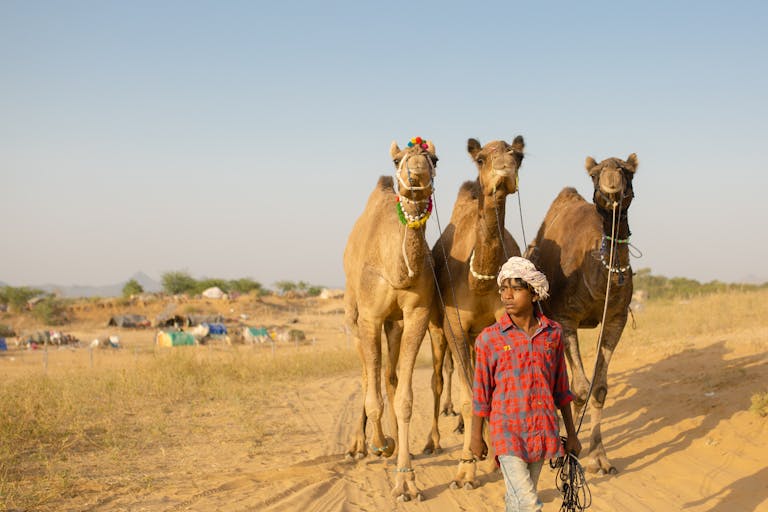
Sachiya Mata Temple Osian History and Visiting Tips (2026 Guide)
By Osian Jodhpur Travel Team – Written by Rehan, local desert travel expert
Estimated Reading Time: 10 minutes
Affiliate Disclosure: This article contains affiliate links. We may earn a small commission — at no extra cost to you.
Introduction
Sachiya Mata Temple Osian, Perched atop a hill overlooking the desert town of Osian, the Sachiya Mata Temple is one of the most revered and architecturally magnificent temples in Rajasthan.
Dedicated to Goddess Sachiya Mata, this ancient shrine is not just a place of worship — it’s a symbol of Osian’s glorious spiritual past, artistic excellence, and living faith. Every year, thousands of devotees and travelers visit to seek blessings, admire its stone carvings, and watch the sunset paint the desert gold.
In this guide, we’ll explore the history, legends, architecture, and visiting tips of the Sachiya Mata Temple — the spiritual heart of Osian Jodhpur.
🏜️ The Legend of Sachiya Mata
According to local belief, Sachiya Mata is the Kuldevi (family goddess) of the Oswal Jain community and many Rajput clans in Rajasthan. The name “Sachiya” comes from Satya or Truth — symbolizing the goddess’s honesty and divine justice.
Legend says that when demons began troubling the gods, the goddess manifested in Osian to restore peace. Since then, she has been worshipped as a protector deity — ensuring truth and harmony prevail.
💡 Tip: The temple is considered highly auspicious for new beginnings and family prayers — many locals visit during weddings or naming ceremonies.
🕉️ Historical Background
The Sachiya Mata Temple dates back to the 8th century, during the rule of the Gurjara-Pratihara dynasty, who made Osian a major religious and cultural center.
Originally a cluster of more than 100 temples, Osian became known as the “Khajuraho of Rajasthan” because of its detailed carvings and sacred architecture. The Sachiya Mata Temple has stood the test of time — restored multiple times through history — and continues to attract devotees from across India.
Historical Highlights:
- Built around 8th–9th century CE
- Associated with both Hindu and Jain traditions
- Still an active pilgrimage site for the Oswal Jain community
💡 Tip: The temple’s oldest stone inscriptions are found near the entrance steps — look closely for faded Sanskrit carvings.
🏰 Architecture and Design
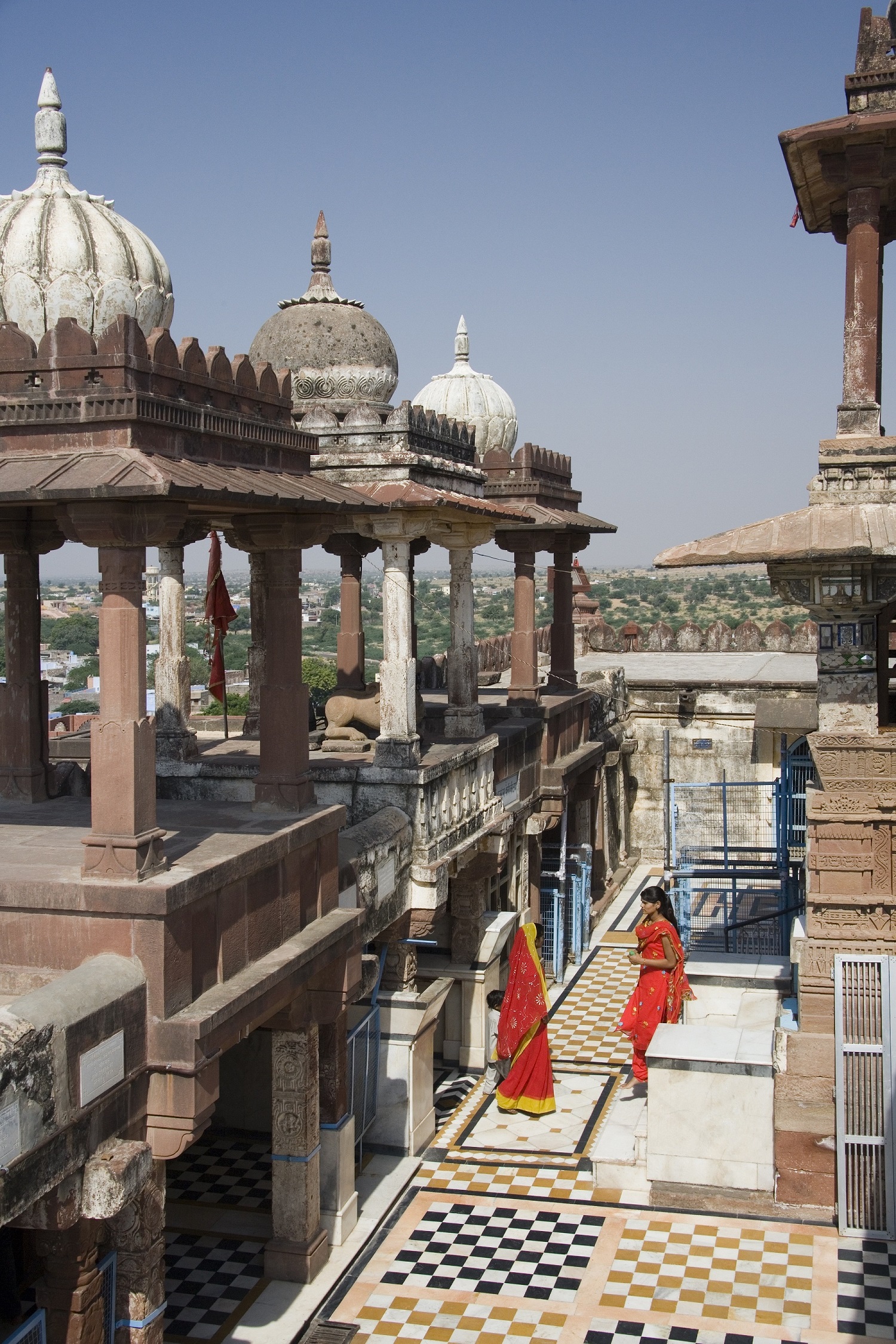
The Sachiya Mata Temple is a masterpiece of early medieval Rajasthani architecture, built in red sandstone. The temple complex is accessed through seven beautifully sculpted gateways (Toranas), each symbolizing the spiritual journey toward truth.
Architectural Features:
- Intricate carvings depicting gods, dancers, and mythical beings
- Multi-tiered shikhara (spire) with ornate sculptures
- Large mandapa (assembly hall) supported by carved pillars
- Elevated platform with panoramic desert views
The craftsmanship is striking — every wall and ceiling panel tells a story, blending elements from Hindu and Jain temple design traditions.
💡 Tip: Sunset is the best time to photograph the temple façade — the red sandstone glows golden.
📍 View on Google Maps – Sachiya Mata Temple Osian
🔔 Rituals and Worship
The temple remains active throughout the year, with daily aartis and seasonal fairs drawing large crowds.
Main Rituals:
- Morning Aarti: 6:00 AM – 7:00 AM
- Evening Aarti: 7:00 PM (Sunset)
- Navratri Festival: Held twice yearly, one of the biggest celebrations in Osian
During Navratri, the temple comes alive with devotional songs, colorful lights, and thousands of devotees offering prayers to the goddess.
💡 Tip: Non-Hindu visitors are welcome but should maintain silence during aarti and avoid entering the sanctum during rituals.
📿 Jain Connection – The Kuldevi of Oswal Jains
The Oswal Jain community, originating from Osian, considers Sachiya Mata as their Kuldevi. Many Jain families from across India make pilgrimages here to offer prayers before major family events.
Despite being a Hindu goddess, the temple reflects a unique spiritual harmony — a shared space of devotion for both Hindus and Jains.
💡 Tip: Look for Jain-style carvings on pillars inside — a reminder of Osian’s rich interfaith heritage.
🛣️ How to Reach Sachiya Mata Temple
- From Jodhpur: 65 km (1.5 hours by road via NH62)
- By Car/Taxi: ₹1,800–₹2,000 round trip
- By Bus: Frequent buses from Jodhpur Paota area to Osian village
- By Train: Local passenger trains (limited service)
💡 Tip: The temple is located on a small hill — prepare for about 100–120 steps from the parking area to the main shrine.
⏰ Best Time to Visit
- October to March: Pleasant weather and clear skies
- Morning: 6:30 AM – 9:00 AM for calm visits
- Evening: 4:30 PM – 6:30 PM for sunset views
Avoid mid-day hours during summer months (April–June) — the stone steps can get very hot.
💡 Tip: Carry a hat, scarf, and water bottle — the desert sun can be intense even in winter.
📷 Photography Tips
- The best angles are from the lower steps facing upward toward the gateways.
- Avoid flash photography near the sanctum.
- Early morning light is perfect for detailed carvings, while sunset is ideal for silhouettes.
💡 Tip: Visit just after sunrise for fewer crowds and soft lighting on the temple walls.
🛍️ Nearby Attractions
- Mahavira Jain Temple: 500 m away – one of Rajasthan’s oldest Jain temples
- Osian Sand Dunes Safari: Perfect post-temple evening plan
- Osian Village Market: Handicrafts, miniature idols, and local snacks
- Pippala Devi Temple: A quiet and ancient shrine off the main route
💡 Tip: Combine temple sightseeing with a sunset desert safari for the ultimate Osian experience.
🧭 Visiting Guidelines
- Remove footwear before entering temple premises
- Dress modestly (shoulders and knees covered)
- Donations are optional and can be made respectfully at the counter
- Avoid loud conversations and photography inside sanctum
💡 Tip: Early morning visits on weekdays offer the most peaceful experience.
🎭 Festivals at Sachiya Mata Temple
Navratri Festival:
Held twice a year (March–April & September–October), this is when the temple attracts thousands of pilgrims. The entire hill is lit up, and cultural programs are held in the evenings.
Purnima (Full Moon Days):
Special aartis and lighting ceremonies take place every full moon, accompanied by local devotional music.
💡 Tip: Plan your visit during Navratri if you want to experience the temple’s festive energy — but book accommodation early.
👉 Related Posts You Might Like
- Temples and Spiritual Heritage of Osian Jodhpur
- Osian Jain Mandir and Temple Architecture Guide
- Festivals and Rituals in Osian Temples You Must See
- Spiritual Walk Through Osian Ji Mandir Complex
- Osian Desert Safari – Complete Guide & Booking Tips
❓ FAQ
Q1. Who built the Sachiya Mata Temple in Osian?
A: The temple was built by the Gurjara-Pratihara dynasty in the 8th century, with later restorations by Jain and Rajput patrons.
Q2. Why is the temple important for Jains?
A: Goddess Sachiya Mata is the Kuldevi of the Oswal Jain community, originally from Osian.
Q3. Are non-Hindus allowed to visit the temple?
A: Yes, visitors of all faiths are welcome, as long as they respect temple customs.
Q4. What is the best time to visit Sachiya Mata Temple?
A: Early morning or during sunset for pleasant weather and less crowd.
Q5. How many steps are there to reach the temple?
A: Around 100–120 steps lead from the base to the main sanctum — moderate climb.